When accuracy was a contest
How mechanical accuracy became something to be tested, ranked, and won, before precision became too ordinary to feel dramatic.
Accuracy is now mostly invisible. It is in phones, computers, cars, ovens, radios, cheap quartz watches, and objects that do not seem to be clocks at all. A person rarely needs to ask whether the time around them is correct. It usually is, or close enough that the question has lost most of its force.
Mechanical watches live strangely inside that world. Their accuracy can still be measured, certified, praised, or criticized, but it no longer carries the same drama. A watch gaining a few seconds a day may be impressive, but not in the way it once was. It is no longer a public proof that one maker had mastered time better than another.
There was a period when accuracy was not only a property of a watch. It was something submitted, tested, recorded, ranked, and won.
Before precision became ordinary, it could be competitive.

The observatory as referee
The word observatory can feel decorative now. It appears in old advertisements, chronometer certificates, caseback inscriptions, and brand histories, often with the soft authority of a period term. But for much of watchmaking history, the observatory was not a metaphor. It was one of the places where time was made official.
Astronomy, navigation, public time, and watchmaking were all tied to the same problem. Time had to be measured seriously. A precise watch was not only useful because it was convenient. It was useful because it could help carry time away from the place where time had been established.
This changed the nature of the claim. A maker could say that a watch was precise, but a submitted chronometer had to survive a different kind of judgment. It was tested away from the shop, under rules, over time, against standards, and sometimes against other watches.
The important part was not only that the watch performed well. It was that the performance was witnessed.
That is what made observatory culture so different from the modern spec sheet. A certificate says that something is good enough. A contest says that something was better.
Accuracy had become public.
Before the wrist, accuracy lived in the pocket
Wristwatches dominate modern collecting, but the older culture of precision belonged first to larger watches. The pocket watch was the natural object of early chronometry. It had size, stability, and dignity on its side. It could be built as a serious instrument at a time when a wristwatch was still small, exposed, and not yet fully respectable.
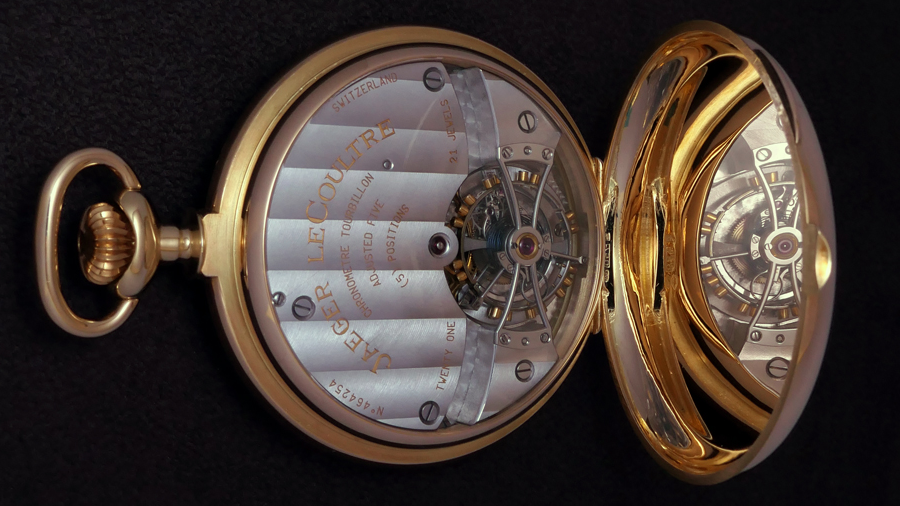
This is one of the reasons high-grade pocket watches can feel so direct. Their precision was often not hidden. Open the case and the watch may tell you what it wanted to be. Medals, observatory results, exhibition awards, prize inscriptions, and chronometer claims could appear on the cuvette or inner cover. The case became part certificate, part advertisement, part memory.
There is something very honest about that. The watch is not only decorated; it is arguing for itself. It shows the institutions it passed through, the prizes connected to its maker, or the kind of precision it wanted the owner to understand.
Modern collectors often separate the object from the paperwork. The watch is here, the certificate is elsewhere, the archive extract is requested later. In many pocket watches, the logic was more immediate. The case itself could become the archive.
Before accuracy was a small word printed on a wristwatch dial, it could be a whole argument engraved inside a pocket watch.
When precision moved to the wrist
The move from pocket to wrist did not make chronometry simpler. In many ways, it made it more difficult.
A wristwatch was smaller. Its balance was smaller, its energy more limited, its parts more compact. It was also worn in a harsher and less predictable way. A pocket watch could spend much of its life in one general orientation. A wristwatch moved constantly. It was turned, shaken, warmed by the body, cooled by the air, and asked to remain stable through a life it could not control.
For a long time, the wristwatch had to prove that it could be more than convenient. It had to prove that smallness did not mean unseriousness.
That is part of what makes mid-century chronometer wristwatches interesting. They belong to a moment when the wristwatch had already become normal, but mechanical precision still had public weight. The old culture of observatory testing had moved into a smaller object, and the technical challenge had changed.
This is where many of the famous names enter the story. Zenith 135. Longines 360. Peseux 260. Omega 30T2RG. The list can become seductive very quickly, because calibre numbers make history feel neat. They give collectors something to remember, search for, and rank.
But chronometry was never only a list of calibres.
A movement could be designed for accuracy, but the result depended on the example, the adjustment, the preparation, and the purpose. Some movements were made for production. Some were made for competition. Some lived between those worlds. The calibre number is the beginning of the story, not the whole story.
The watch that wins
A competition watch is a strange object. It may look like a watch, and it may contain a movement related to watches that were sold, but its purpose can be different. It is not always made primarily to be worn, serviced, sold, or used for years by an ordinary owner. It can be made to prove something.
Some chronometer movements submitted to observatory trials were specially selected. Some were specially prepared. Some were adjusted with an intensity that ordinary production could not receive. Some existed less as consumer products than as instruments in a contest. Their value was not only in daily usefulness, but in what they demonstrated about a manufacture’s ability.
This is easy to misunderstand now. A collector sees a famous chronometer calibre and imagines a simple hierarchy: this movement was better than that movement. But the old world of accuracy was more conditional. Better for what? Better in which example? Better under which rules? Better after whose adjustment? Better as a competition object, or as a watch someone could actually live with?
The difference is not a flaw. It is the point.
A competition movement could be a brand’s proof of mastery, even if the watches customers bought were less extreme. The contest object and the commercial object were connected, but they were not always the same thing.
The same is true of the people behind them. A movement did not become a great timekeeper by architecture alone. It had to be regulated. The precision regulator, the régleur, was central to the old culture of accuracy. The work was slow, patient, and partly invisible. A balance, hairspring, escapement, and regulator could be designed with chronometry in mind, but someone had to make the system behave.
Finishing can be admired at rest. A case can be judged in a photograph. A dial can announce itself immediately. Regulation is more elusive. It is not what the watch looks like, but how it acts over time.
Chronometry was not only a property of the watch. It was a craft performed on the watch.
Precision for the public
The contest world would have mattered less if its language had stayed inside observatories. But accuracy escaped into commercial watchmaking.
Brands learned how to translate precision into trust. Chronometer, Observatory, Royal, Constellation, Ultra-Chron, officially certified, adjusted, high frequency: these words and ideas gave buyers a way to understand seriousness. They suggested that a watch was not merely well made, but dependable in a measurable way.
This is where the distance between competition and commerce becomes productive. A customer did not need to own the exact object that won a trial to feel the prestige of a maker that had competed. The observatory result could become advertising. The certificate could become a dial word. The contest could become a model name, a case inscription, or a line in a catalogue.
Vacheron Constantin’s Chronomètre Royal is a useful example because it belongs to both worlds of meaning. It was not only about extreme competition performance, but about presenting precision as a public promise to the owner. The name made accuracy feel sovereign, stable, and legitimate. It turned chronometry into identity.
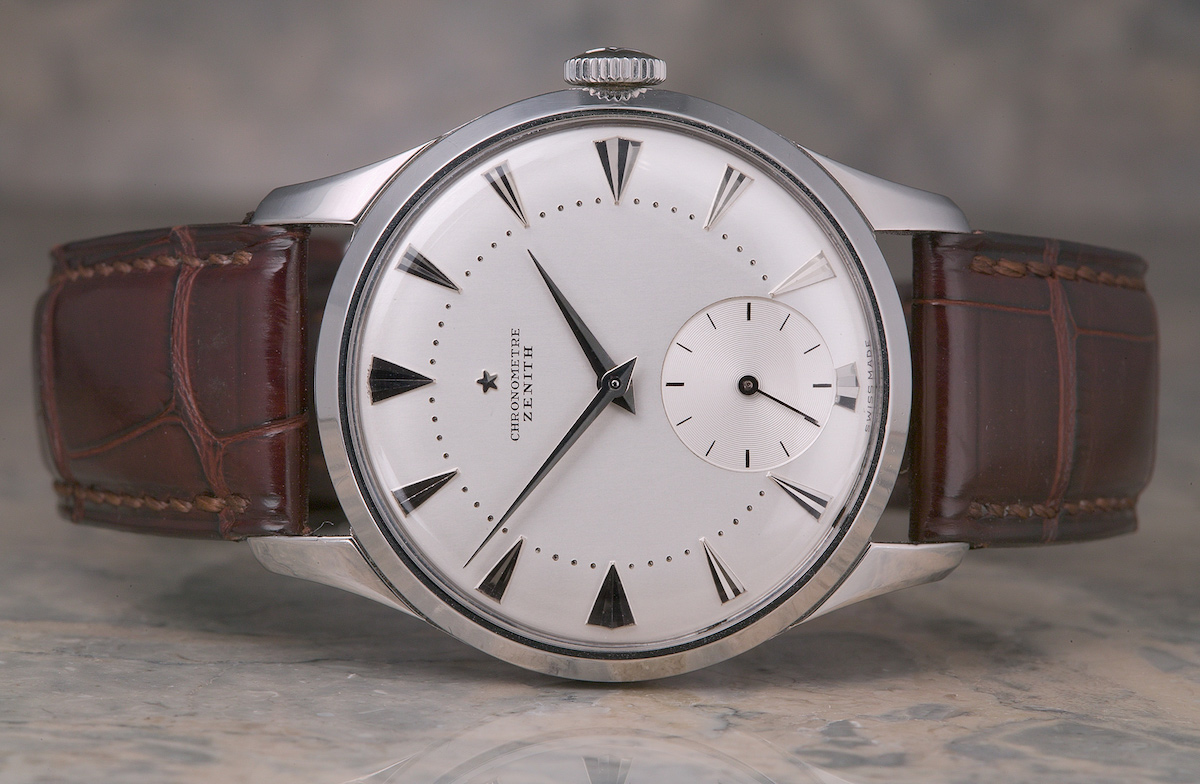
Many later wristwatches did something similar in their own way. The Omega Constellation connected everyday ownership with chronometer prestige. Longines used high-frequency precision to make accuracy feel modern. Zenith’s chronometer reputation made the 135 more than a movement. Seiko’s high-grade mechanical chronometers showed that observatory ambition was not only Swiss.
The observatory created prestige. The dial translated it.
Precision becomes ordinary
The old contest ended at the moment mechanical accuracy had become extraordinary.
That is the cruel part. Mechanical chronometry did not disappear because it had failed. In many ways, it had become better than ever. The late observatory years show an intense refinement of high-frequency movements, special regulation, and international competition. The mechanical wristwatch had proved that it could be a serious precision instrument.
Then precision escaped the mechanical arena.
Quartz changed the meaning of accuracy because it made it too easy to dramatize in the old way. A mechanical watch could still be beautiful, difficult, impressive, and precise by mechanical standards. But once electronic and quartz timekeeping arrived, the contest was no longer fair in the same language. The question had changed.
Seiko makes this ending especially sharp. Its mechanical movements rose dramatically in observatory competitions during the 1960s, just as quartz was about to make the whole idea of mechanical precision feel historical. The same company that fought its way into the old contest helped define the new age that made the contest obsolete.
That does not make the old achievements smaller. It may make them more moving.
Mechanical accuracy lost its central drama not because it became unimportant, but because precision became ordinary. The thing that had once required institutions, regulators, records, and contests could now be achieved by another technology with a different logic.
The mechanical watch remained. But accuracy was no longer its kingdom.
What the word still carries
Today, chronometer can mean several things at once. It can be a certification. It can be a dial inscription. It can be a collector keyword. It can be a sign of quality, or a piece of inherited prestige whose original world is only partly remembered.
That is why old chronometer watches should not be understood only by asking whether they are accurate now. Many are not. They have been worn, serviced, magnetized, polished, repaired, neglected, or adjusted by people far removed from the original regulating bench. Their present performance may say less about their historical meaning than we want it to.
The better question is what kind of accuracy they were made to represent.
Some represented a contest. Some represented a standard. Some represented a maker’s public claim. Some represented the skill of a regulator. Some represented the translation of observatory prestige into something a customer could carry in a pocket or wear on a wrist.
That older meaning is richer than the modern word suggests. Accuracy was not only a number. It was a culture around the number.
The most interesting chronometer watches are not interesting because they can beat a phone. They are interesting because they come from a time when mechanical precision was still difficult enough to become public, competitive, and dramatic.