The death of small watches
How small watches became small not by changing, but by being judged in a louder world, where presence, photography, and modern taste reshaped proportion.
A small watch is rarely allowed to be neutral. A 31 mm case appears in a listing, with a good dial, correct hands, and a case that has survived better than most. Then the diameter appears, and the watch is dismissed before its proportions are really considered.
It is too small.
But many watches now treated as difficult, delicate, or almost unwearable were not made as strange objects. They were not always miniature watches, dress-only watches, or compromises. In their own period, many of them were simply watches. What changed was not only the size of watches, but the way modern taste, photography, and collector language influenced how we read them.
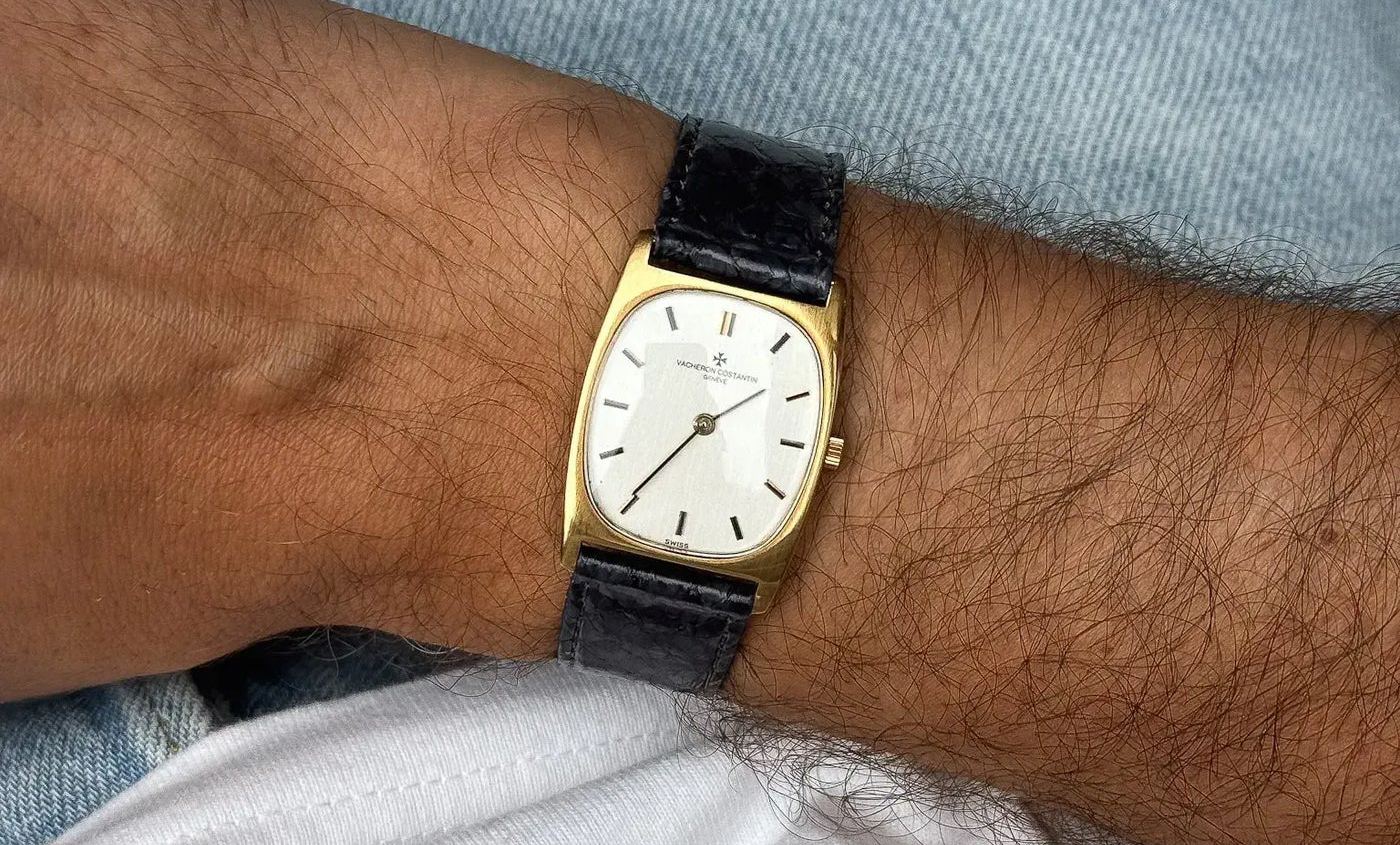
Small compared to what?
Diameter is the easiest number to repeat, but it is rarely the whole watch. A case is also its lug length, dial opening, bezel thickness, crystal height, strap width, thickness, colour, and shape. A 34 mm watch with long lugs and a large dial can feel more present than a larger watch with a heavy bezel. A rectangular, cushion, or tonneau case can make the number even less useful.
The strap changes the reading too. A thin leather strap can make a small watch feel complete, while a thick padded strap can make the same watch look lost. This is one reason old watches are so often misjudged online. The number is simple, but the object is not. A watch is not worn as a diameter. It is worn as a set of proportions.
When small was not small
The modern idea of a men’s watch has moved. That movement makes older watches look as if they shrank, even when they did not. A watch between 30 and 35 mm can now feel like an exception, but for much of wristwatch history that range was not automatically unusual.
It could be formal, practical, elegant, ordinary, expensive, cheap, conservative, or fashionable. Size alone did not decide the category. Smaller cases also belonged to a different surrounding world: shirts were cut differently, straps were thinner, bracelets were lighter, crystals were warmer, and watches were often expected to sit under a cuff rather than stand above it.
A small watch did not always mean a quiet watch. Sometimes it simply meant a watch whose proportions belonged to its time.
Large watches existed
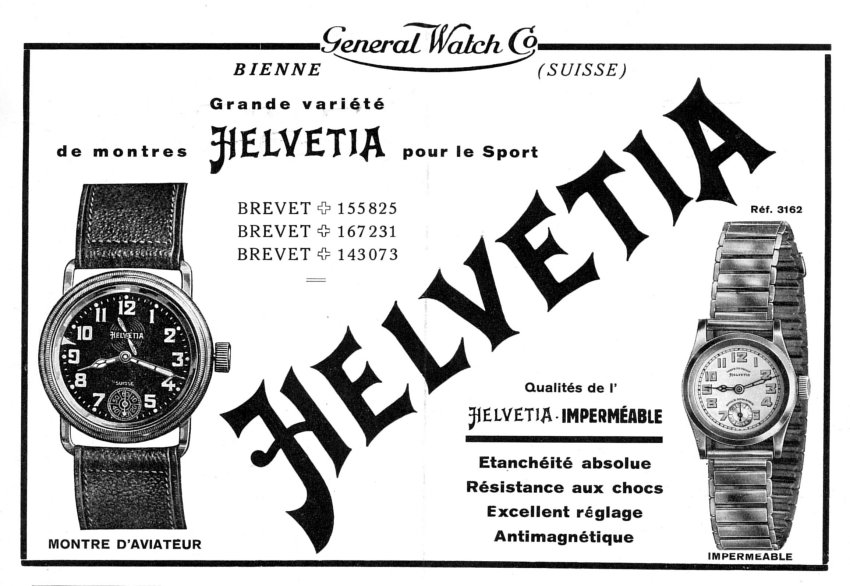
Large watches were not invented by modern collecting. Oversized wristwatches, chronographs, pilot’s watches, military pieces, waterproof cases, and instrument-like designs existed long before the modern oversized watch became familiar. Some were large because the movement required it. Some because the dial needed to be read quickly. Some because the case had to be stronger, more waterproof, or easier to use with gloves.
The difference is not that old watches were small and modern watches are large. The difference is that large watches often used to explain something about construction, legibility, or purpose. Later, size increasingly became a language of presence.
The market renamed them
One of the clearest signs of this shift is the word unisex. Many watches now described that way were not designed as a special middle category. They were often just men’s watches, sold and worn in a period with different expectations.
The word is not always wrong, and it can be useful today. But it also shows how the market rewrites old objects using modern categories. The watch did not change identity. The category moved around it.
The wrist shot changed the watch
Watches were not designed to be judged from a close phone photograph of a wrist. The wrist shot changed scale by making watches perform inside a cropped image. A close lens can distort the wrist, enlarge the hand, and make a watch look smaller or larger than it feels in person.
This did not change taste on its own, but it gave watches a new stage. Presence became something that could be photographed quickly. A watch that looked balanced in life could look underwhelming on a screen, especially when compared to modern watches designed with stronger cases, wider bracelets, deeper dials, and more immediately recognizable shapes.
Older watches often ask for a slower kind of looking. Their quality can sit in the shape of the lugs, the curve of the crystal, the thinness of the bezel, the distance between the numerals and the edge of the dial, or the way the strap leaves the case. Those details are easy to miss when a watch is judged mainly by wrist presence.
The small watch did not become less wearable. It became less loud.
Proportion, not diameter
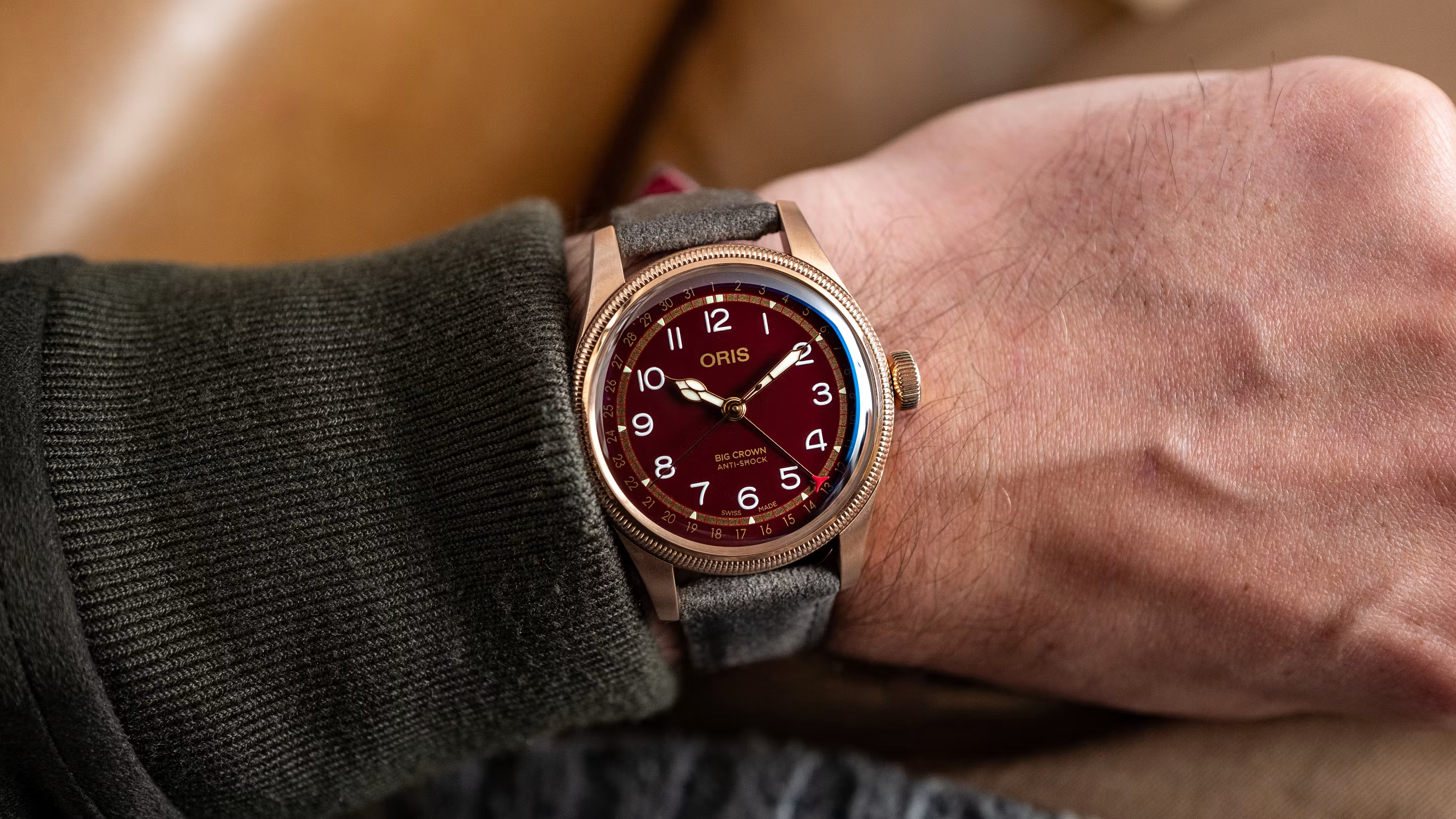
The better question is not whether a watch is small, but whether it makes sense. Does the dial fill the case well? Do the lugs give it structure? Is the bezel thin or heavy? Does the strap support the watch, or overpower it? Does the crystal add height and warmth? Does the case shape carry more presence than the number suggests?
A 31 mm watch can be too small. A 38 mm watch can be too large. Neither number answers the question alone. Vintage watches often reward proportion more than measurement, which is part of what makes them difficult to compare with modern watches. They were not always trying to solve the same problem.
What disappeared
Small watches did not die because they failed. They are still here, in drawers, catalogues, auction listings, dealer trays, and collections. Many remain exactly what they always were: complete objects with their own scale and logic.
What disappeared was the context that made them easy to understand. A small watch asks to be read on its own terms, not as a reduced version of a modern watch, and not as a compromise waiting to be excused.
The watch did not become wrong. The world around it became louder.