Before bracelets belonged to brands
A flexible construction from specialist makers became one of the defining looks of mid‑century watches, when the bracelet still had its own identity.
A beads of rice bracelet is one of the easiest vintage bracelet styles to recognize.
Small rounded links, usually arranged in rows, moving like a flexible strip of metal fabric. It is refined without being delicate, decorative without feeling purely ornamental. On the right watch, it can make a steel case feel softer and a dress watch feel less fragile.
Today, the name is familiar enough that it can feel generic. A beads of rice bracelet is often treated as just another vintage-looking option.
But historically, the bracelet is more interesting than that.
It belongs to a period when bracelets were often independent objects. They had their own makers, their own clasps, their own construction details and sometimes their own stamps. The dial might carry the famous name, but the bracelet could tell a second story.
What is a beads of rice bracelet?
The name is visual.
A beads of rice bracelet is usually made from small rounded central links, arranged in several rows, often framed by flatter outer links. The rounded links catch the light individually, creating the impression of small metal grains across the wrist.
There is not one single beads of rice construction. Some have five rows. Some have seven or nine. Some are more rounded, some flatter, some more delicate, some more robust. Some use straight end links, others curved end links. Some have stretch sections or unusual clasp systems.
That variety matters. “Beads of rice” is useful collector language, but it is not a precise technical standard.
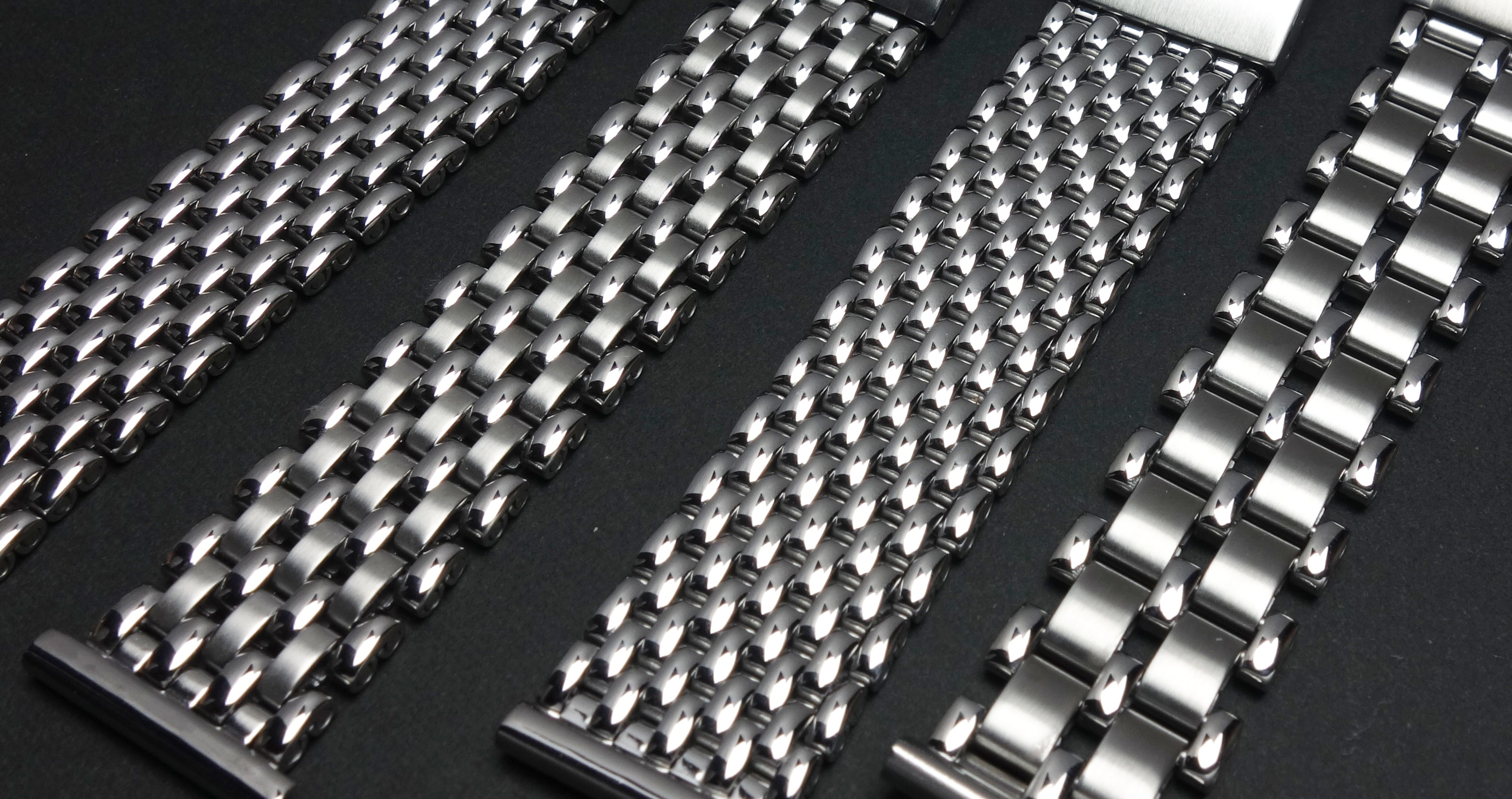
The basic idea is simple: many small links instead of a few large ones. That is what gives the bracelet its texture, movement and softness.
Why the construction worked
Beads of rice bracelets are comfortable because they articulate well.
The small links allow the bracelet to wrap closely around the wrist. Compared with larger flat-link or Oyster-style bracelets, they can feel lighter and more flexible. The effect is almost textile-like: metal, but with some of the softness of a strap.
That made the construction especially useful for mid-century watches. Many cases were smaller and thinner than modern ones, and a heavy bracelet could easily overpower them. A beads of rice bracelet added presence without too much visual weight.
It also sat between categories.
It was more durable and integrated than leather, but less tool-like than a heavy sports bracelet. It could work on a waterproof watch, a chronograph, a simple steel watch, or a more formal piece. That flexibility is part of why the style survived so well in memory.
The bracelet specialists
Many mid-century bracelets were not fully brand-owned objects in the modern sense. They often came from specialist makers, and those makers left traces that collectors still study today: clasp stamps, end-link shapes, link construction and adjustment systems.
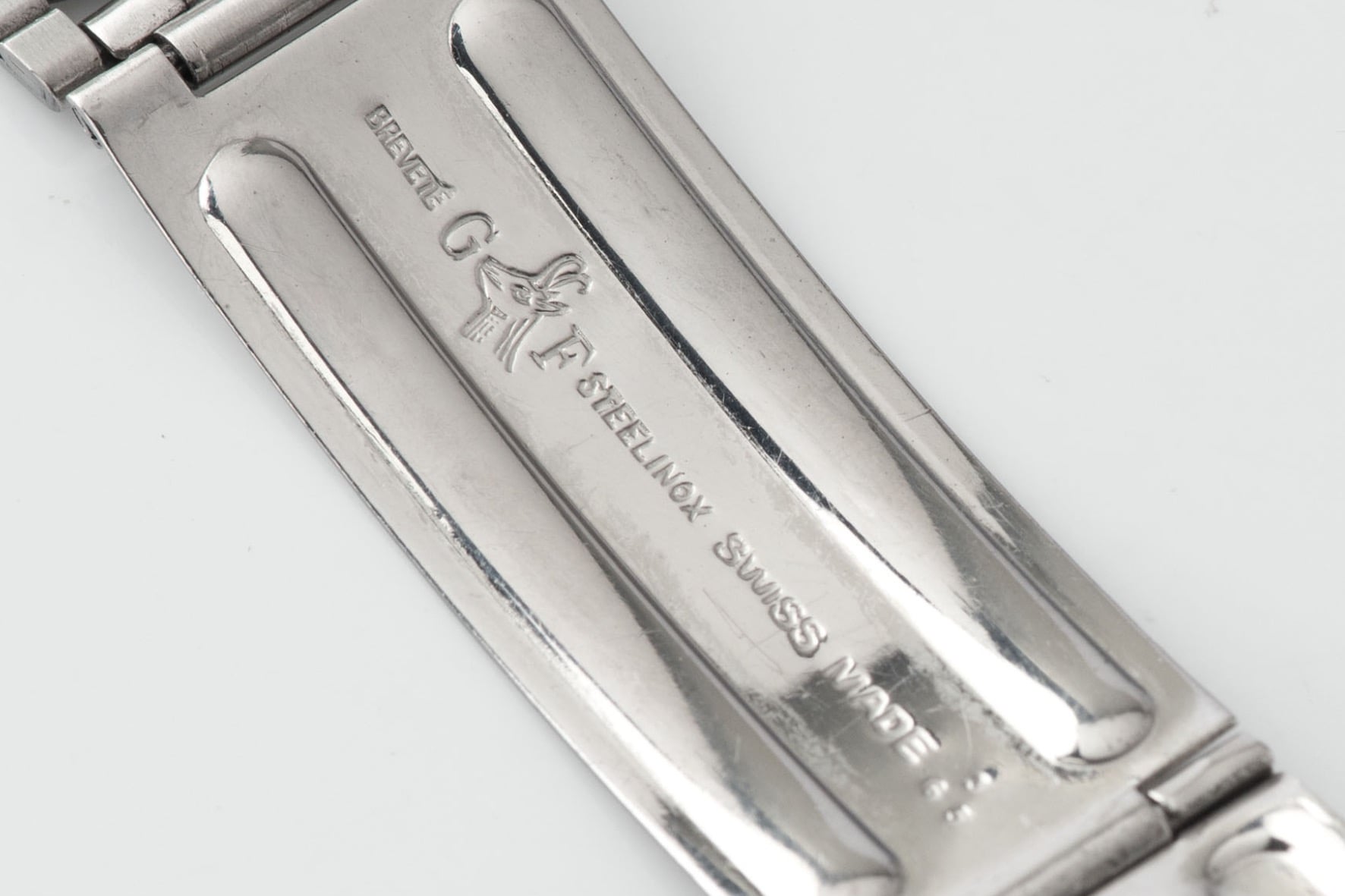
The most famous name is Gay Frères. Founded in Geneva in the nineteenth century, it began with chains before becoming one of the most important watch bracelet makers of the twentieth century. Its bracelets were supplied to major Swiss brands, and a Gay Frères stamp can add historical weight because it connects the watch to a recognized specialist maker.
But Gay Frères was only part of a wider bracelet world. Names like Montal, NSA, Novavit, JB Champion, Kreisler, Gemex, Bonklip and others all belong to that history. Some were known for expandable bracelets, some for precious-metal bracelets, some for practical steel bracelets made in large numbers.
Montal is a good example of why these names matter beyond prestige. It does not have the same mythology as Gay Frères, but some Montal beads of rice bracelets are interesting because of their construction: the sliding adjustment clasp, the sizing system, and the way the bracelet builds flexibility into the object itself.
That is what makes old bracelets worth looking at closely. The same broad visual style could hide very different ideas about comfort, sizing and manufacture.
More than a vintage sports bracelet
Today, beads of rice bracelets are often associated with vintage sports watches. That association makes sense, but it is too narrow.
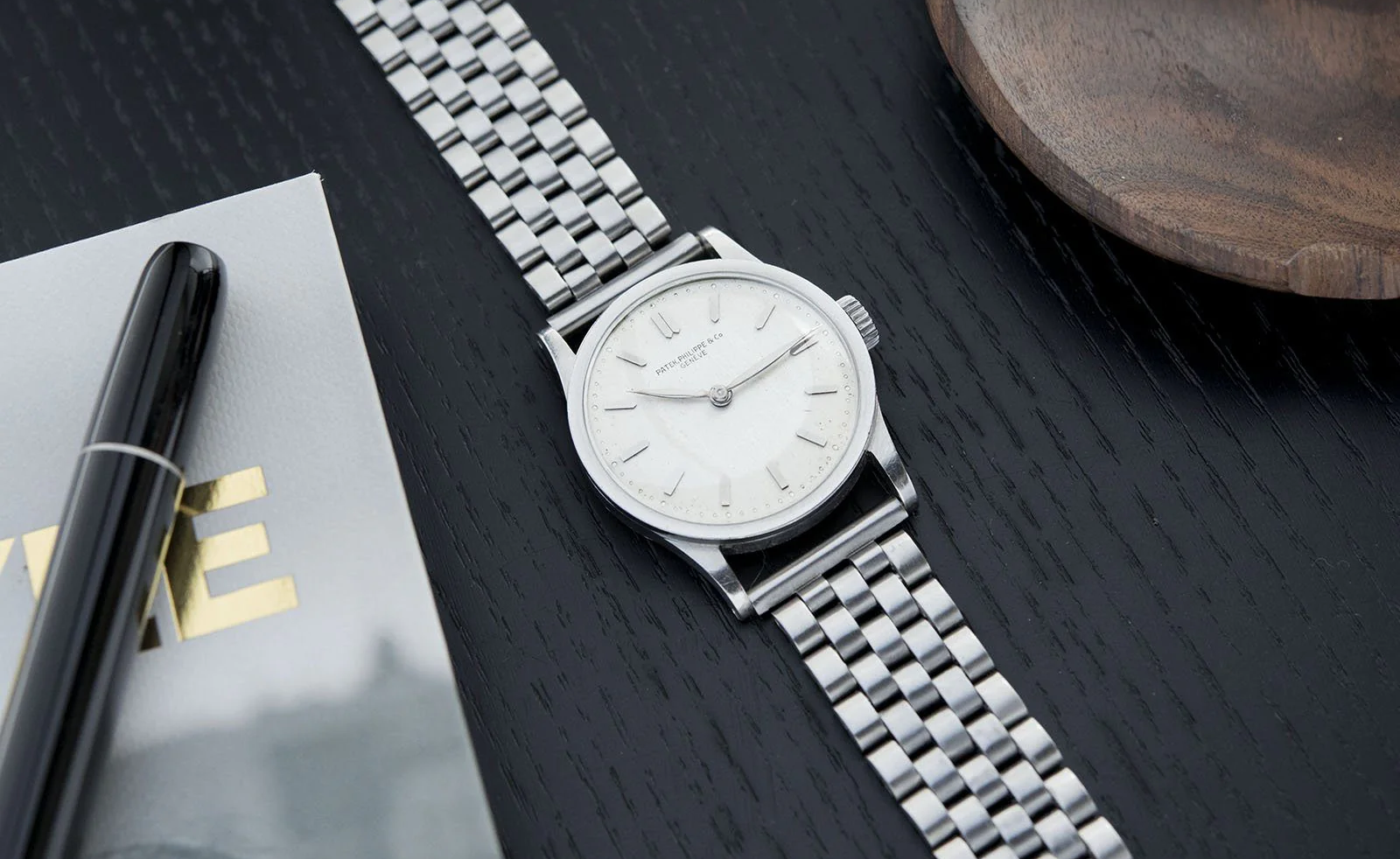
The construction could appear on dress watches, waterproof watches, chronographs and dress-sport pieces. It was not limited to one category.
That range is part of the charm. A beads of rice bracelet could make a dress watch feel more practical, or a steel watch feel more refined. It added texture without making the watch look overly technical.
This is why it is hard to reduce the style to a single use. It was not simply the “sports” bracelet, or the “dress” bracelet. It lived in the space between.
What makes one feel period-correct
The phrase “beads of rice” is not enough.
A modern bracelet can have the right pattern and still feel wrong on an old watch. The details matter: link scale, taper, end-link fit, clasp design, finishing, thickness and the way the bracelet moves.
Old bracelets often feel lighter and more delicate than modern ones. They may have folded links, hollow construction, simpler clasps or more visible stretch. These are not always advantages in a practical sense, but they are part of the period feel.
The clasp is especially important. A stamped clasp, a sliding adjustment system, or a maker’s mark can change the character of the bracelet completely.
This is why an old Montal and a modern beads of rice bracelet are not really the same object, even if the basic visual language is similar.
Why it is still used today
Beads of rice bracelets are still made because the construction still works.
They are comfortable, recognizable and strongly associated with vintage watches. For modern brands and aftermarket makers, the style offers an immediate historical signal.
But modern examples often feel different. They are usually more solid, more standardized and easier to size. That can make them better for everyday use, but it also changes the character.
The bracelet still works. It just no longer belongs to the same manufacturing world.
Why it matters
A beads of rice bracelet is not just a vintage-looking accessory.
It points to a time when bracelets were often independent components, made by specialist suppliers and matched to watches in a more fluid way than today. Gay Frères shows the prestige side of that world. Montal shows the mechanical and practical side.
That is what makes the construction interesting.
Not because every vintage watch should wear one.
But because when the details are right, few bracelets explain the period better.