The leather we forgot
Once a practical strap material, its texture and durability now feel like details from another era, after the logic around leather changed.
Pigskin is not a leather most people think about when choosing a watch strap today.
Calfskin feels normal. Alligator feels formal. Suede feels casual. Shell cordovan feels enthusiast-approved. Pigskin, by comparison, feels oddly specific.
That is what makes it interesting.
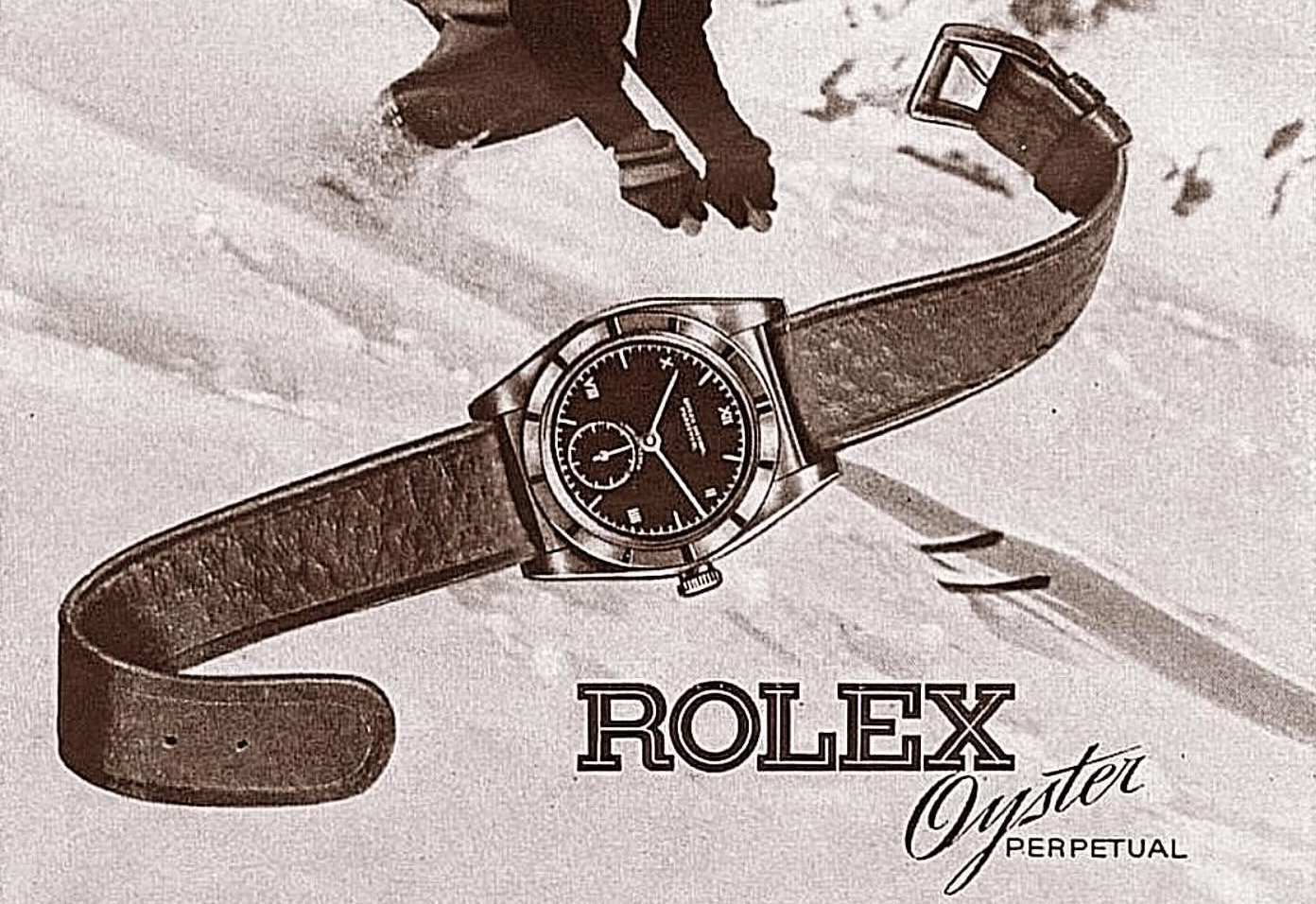
It was not always an unusual choice. Pigskin was once a practical and familiar strap leather, especially on the kinds of small, simple watches that now get called vintage. It was not exotic, and it was not trying to be luxurious. It worked because it was thin, strong, flexible and easy to recognize.
Today, those same qualities make it feel like a detail from another era.
What is pigskin?
Pigskin is leather made from the hide of a pig.
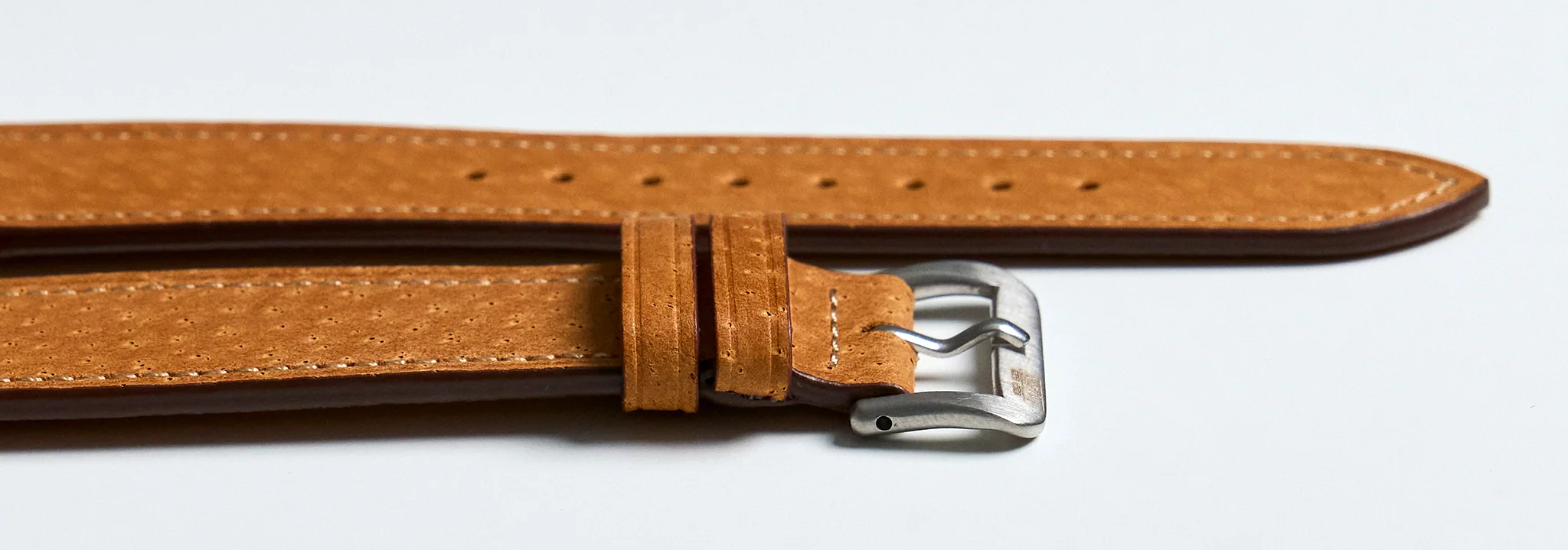
Its most recognizable feature is the grain. Pigskin usually shows small pores across the surface, often in little groups. These pores are not a printed pattern or an imitation grain. They come from the structure of the hide itself.
That gives pigskin a very different character from calfskin. Calf can look smooth, fine and controlled. Pigskin looks more open and irregular. It has texture without becoming exotic.
On a watch strap, this makes pigskin feel practical rather than precious. It has a slightly utilitarian quality, but not a rough one. It can look plain from a distance and quite distinctive up close.
Why it worked for watch straps
Pigskin made sense because watch straps used to be much simpler objects.
It seems especially at home in the strap language of the 1940s, 1950s and early 1960s: smaller cases, narrower lugs, thinner leather and less padding. A 32 or 34 mm watch usually does not need much strap. Too much leather can easily overpower the case.
Pigskin suited thin construction well. It could be flexible without feeling too fragile, and strong without needing much bulk. That made it useful for everyday straps.
It also had enough visual texture to avoid looking completely flat. A plain pigskin strap could add interest without turning the strap into the main feature of the watch.
A practical leather, not a luxury signal
One of the easiest mistakes is to judge old materials by modern luxury codes.
Pigskin was not alligator. It was not chosen because it looked rare, glossy or expensive. It was closer to an everyday leather: useful, available and well suited to the job.
That does not make it bad. It just places it in a different category.
A pigskin strap can make a watch feel less formal, but not necessarily less correct. Some watches were never meant to look like jewellery. Many were simply good daily objects, and pigskin matched that character well.
This is part of what modern straps can sometimes miss. They can make vintage watches look more refined, but refinement was not always the original point.
Why it feels unusual today
Pigskin became less visible as strap taste changed.
Calfskin became the safe default for leather straps. It is clean, versatile and easy to dress up or down. Alligator and crocodile became the obvious luxury choices. Suede, nubuck, shell cordovan, rubber and fabric all developed their own clear identities.
Pigskin did not disappear completely, but it lost its obvious place.
Its visible pores can read as too casual for a dress watch. Its practical character can feel too plain next to more refined leathers. And because modern watches are often larger and thicker, the kind of thin strap pigskin suits best is no longer the default shape of the market.
The material still works. The context changed.

Is pigskin still used today?
Yes, but more narrowly.
Pigskin is still used for some modern watch straps, especially vintage-style straps. It is usually chosen when someone wants a thin, textured, old-fashioned leather rather than a modern padded calf strap.
It can also appear as lining leather, where its practical qualities still make sense even when the visible side of the strap is another material. That is a nice detail: pigskin did not simply vanish, but it became less visible.
In a modern catalogue, pigskin has to explain itself. On an older watch, it often does not.
Why it matters
Pigskin is useful because it changes how we think about period correctness.
A period-correct strap is not only about the exact material. It is also about proportion, texture and intent. A strap can be historically plausible and still feel wrong if it is too thick, too glossy or too modern in construction.
Pigskin helps because it points toward a different idea of what a good strap could be: thin, practical, textured and modest.
It is not the right answer for every vintage watch. Calfskin, lizard, alligator and bracelets all have their place. But pigskin belongs in the conversation more often than it does today.
It was not a strange leather.
It only became strange after we forgot why it made sense.